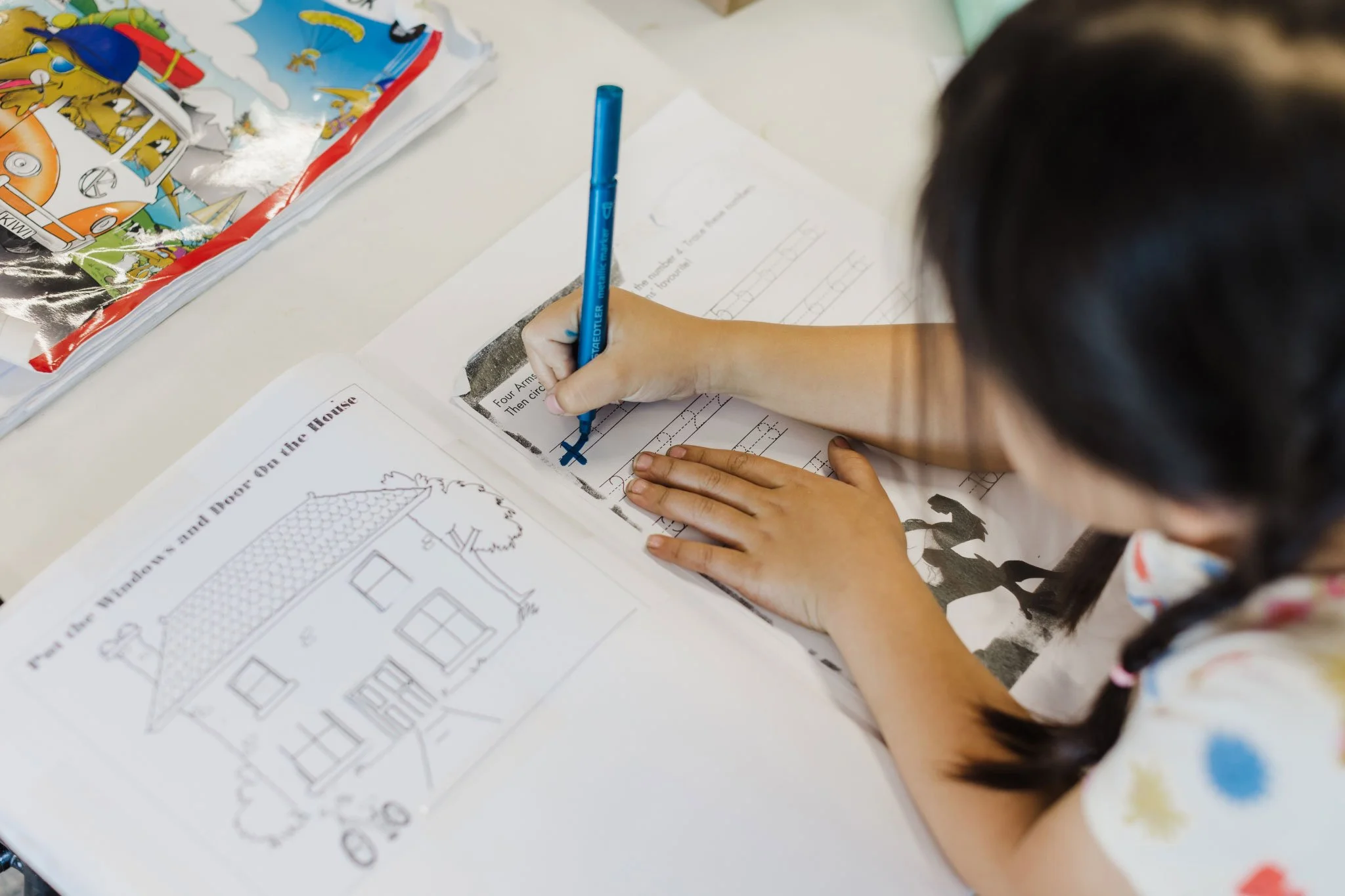
Starting school is a big milestone for children and their families – uniforms, lunchboxes and learning to read and write. But the truth is, school readiness is so much more than knowing letters and numbers. At its heart a successful start to school is built on children’s dispositions – the attitudes, habits and ways of approaching learning that children carry with them into new environments. Children who thrive in their first year of school are not necessarily the ones who can already count to 100, write their names and read!
Some of the dispositions we work on at Uplands Kindergarten are:
Resilience
Starting school comes with new routines, new people, challenges and moments of uncertainty. Being able to manage when your best friends is absent, try again when you fail, when something feels hard or to keep going when things don’t go your way is a powerful foundation for learning.
Working alongside others
School is a social environment. Sharing ideas, taking turns, negotiating and building friendships are essential skills that support both learning and wellbeing.
Developing independence
Simple things like managing their own belongings, opening lunchboxes (and packets!), using the toilet independently and following basic routines help children feel confident and capable in a new setting.
Curiosity and willingness to try
A love of learning – asking questions, exploring new ideas and having a go – is far more valuable than already knowing the “right” answers.
What can you also do at home?
One of the most supportive things you can do for your child is to establish a calm, predictable rhythm at home.
Consistent bedtimes
School days require a lot of energy – emotionally, mentally and physically. A regular early bedtime helps children feel rested and better able to cope with the demands of the day.
Sleep is vital for healthy brain development resulting in better behaviour, stronger immune systems and reduced impulsivity. School age children need at least 9-11 hours of sleep a night.
Prioritising rest and downtime
Tiredness is very common in the first term (and often beyond). Children are processing so much new information and navigating big social environments. Reducing after-school activities for a time and allowing space for rest can make a significant difference to wellbeing.
Alongside dispositions there are some simple practical steps that can make starting school feel more familiar and less overwhelming:
Visit the school together
Becoming familiar with the environment, classroom, toilets and routines helps reduce anxiety and builds confidence.
Meet the teacher
Building an early connection with the teacher can make a big difference. When children feel safe with the adults around them, they are more open to learning and forming relationships.
Talk positively about school
Children pick up on emotions. Speaking about school as an exciting and safe place helps shape their expectations.
Practice everyday routines
Getting dressed independently, packing a bag, getting ready in the morning can be practiced at home to build independence.
Allow time for adjustment
Every child transitions differently. Some will settle quickly, while others may need more time and reassurance – and that’s OK.
How do we support these dispositions and school transition skills at Uplands Kindergarten?
We focus on the real skills children need for school and for life and we build them into everyday moments through play.
You might see children building together, figuring out whose idea to follow, taking turns and working through frustration when it doesn’t go to plan. With gentle support from our teachers they learn to keep going, use their words to negotiate with others and solve problems together.
In simple daily moments , children carry their own bags,find their name stone in the morning, open lunchboxes and manage their own belongings.
These small steps build independence and confidence. Our group discussions help children learn to listen to others, follow instructions, share their thoughts and ideas in groups and develop their scientific thinking and problem solving. They also learn to wait and put up their hands to talk, all skills required for school.
Finally, starting school isn’t a race, and there is no single checklist that determines whether a child is “ready”. Each child brings their own strengths, personality and pace of development.
When we focus on nurturing resilience, relationships and a love of learning, we are giving children the strongest possible foundation – not just for school, but for life.