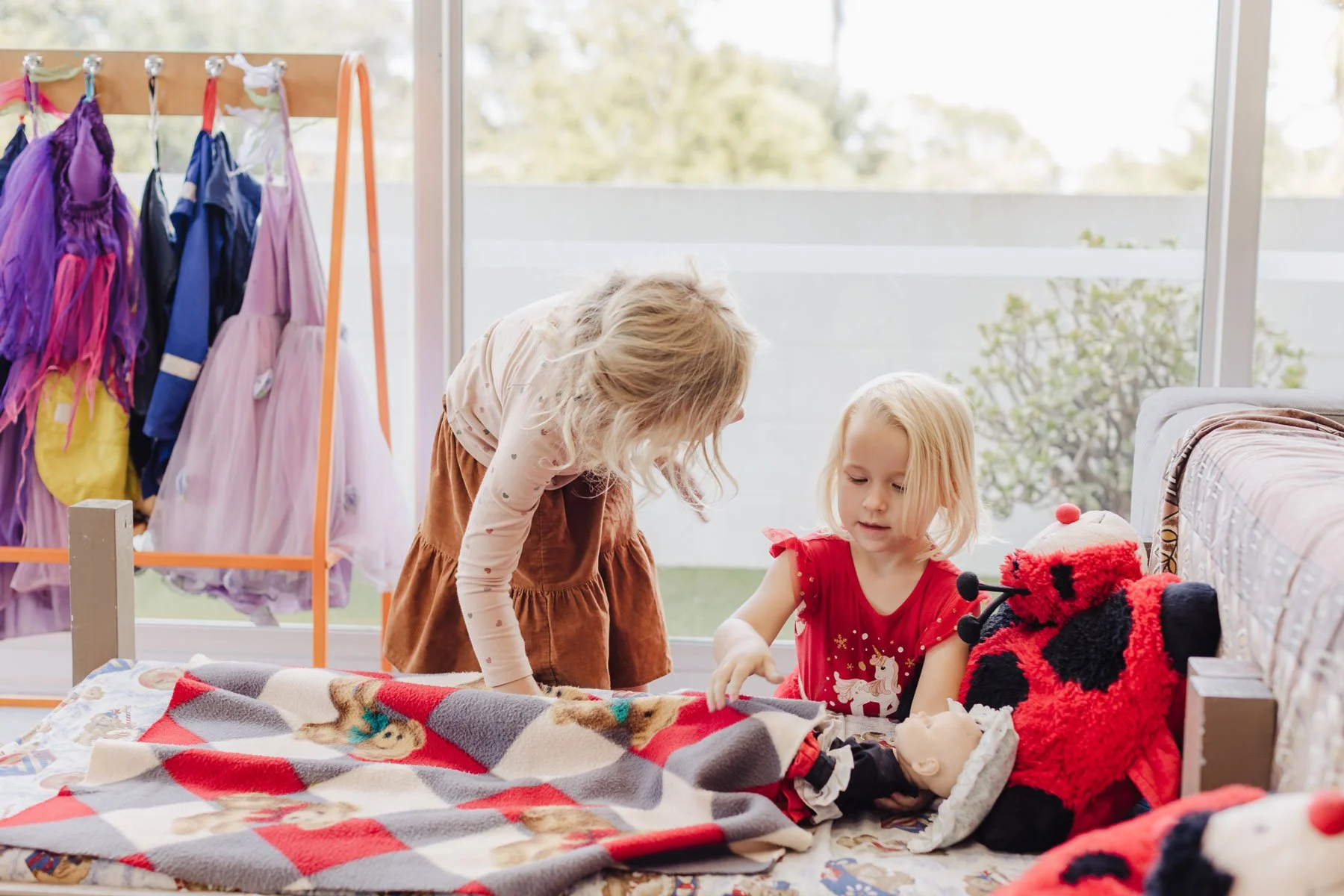
At Uplands Kindergarten, children aged 2-5 years old learn and play together. A mixed-age setting reflects the way children naturally spend time with siblings, friends, cousins and people at home and in the wider community.
At kindergarten, these relationships become an important part of how children learn. They have opportunities to observe others, contribute to shared play and take on different roles as their confidence grows.
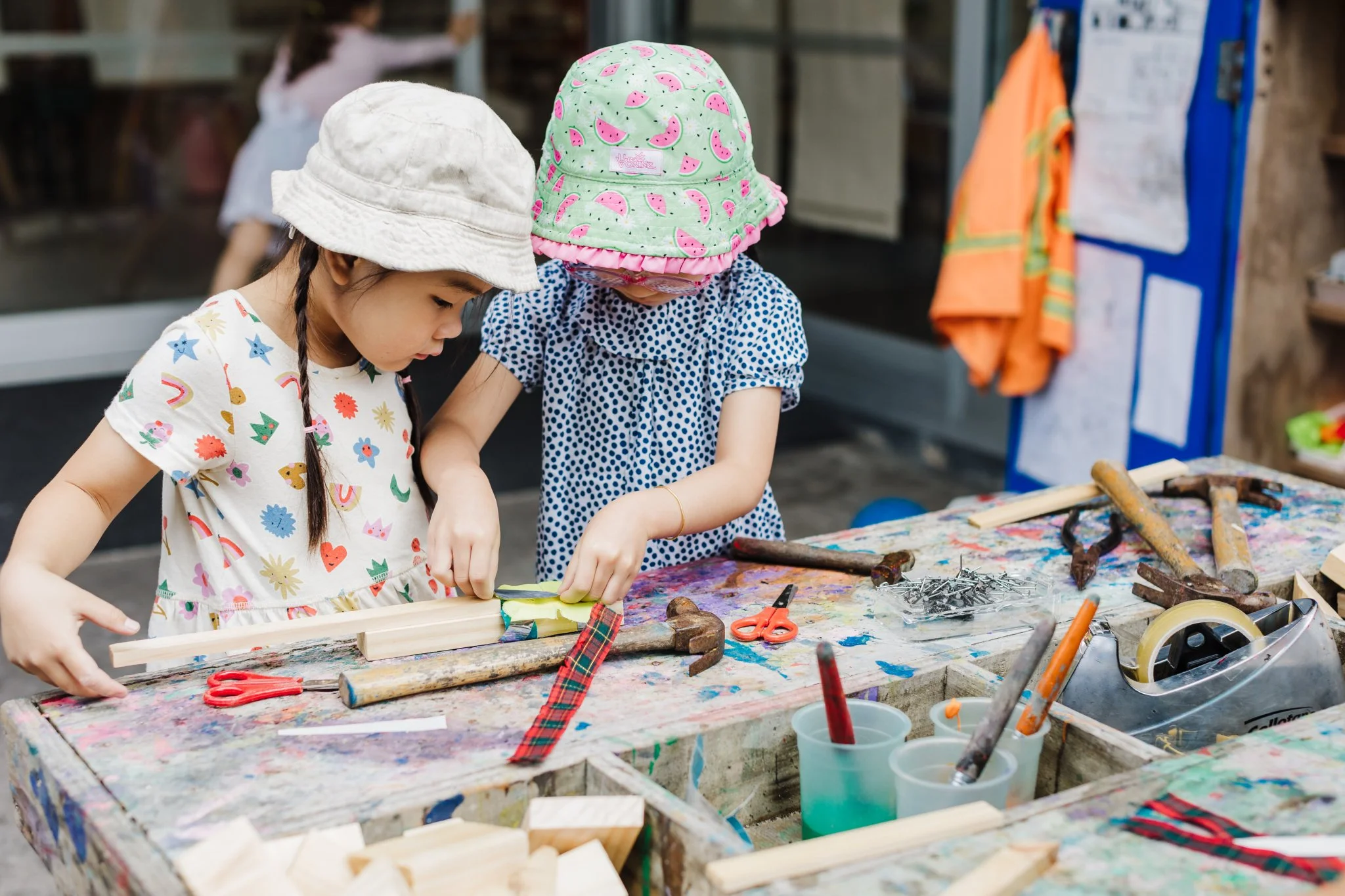
Younger tamariki often look to their older peers as they become familiar with kindergarten life. Watching another child can help them work out how to join in, take turns, learn routines, or approach a new physical challenge. They also hear more complex language being used for a purpose that matters to them, whether that’s asking to join a game, or explaining an idea. Having time to watch and listen allows children to participate when they feel ready.
For older tamariki, mixed-age play offers meaningful opportunities to develop leadership, empathy and patience. Explaining an idea to a younger child takes thought. They may need to find different words, demonstrate what they mean or give the other child more time to respond. In doing so, they revisit their own thinking and learn to adapt their approach. These are also opportunities to practice cooperation and compromise as children work out how to include one another in play.
Our qualified, experienced teachers play an important role in making this work. We provide a safe, well supervised environment and adapt experiences and activities so children can take part at a level that suits them. Because we have low rations (1:8) we get to know each child well over time, we can recognise when they need support to join in, when they’re ready for more challenge and when to give them time to solve a problem together.
Much like siblings learning alongside one another at home, children in a mixed-age kindergarten have opportunities to learn from and care for one another over time. Cross age mentorship develops naturally as older children share what they know and younger children gain the confidence to try things for themselves.
With fewer age based transitions, children experience less of the stress that can come with repeatedly adjusting to new teachers, peers and routines. Staying with familiar teachers gives children time to build trusting relationships and gives teachers time to understand each child more deeply. That continuity helps children feel secure enough to take on new challenges and in time support others to do the same.